

Digital Marketing Strategies for Real Estate: A Complete Guide to Generating More Property Leads

The real estate sector has evolved considerably in recent years. Buyers no longer depend only on newspaper advertisements, property boards, or agents to find their dream homes. Today, they search on Google, explore property websites, watch video tours, and compare projects on social media before contacting a real estate company.
For builders, property developers, brokers, and real estate agents, this change creates a major opportunity. With the right digital marketing strategies, businesses can reach potential buyers, build trust, generate qualified enquiries, and improve their online presence.
However, simply creating a website or posting property photos on Instagram is not enough. Successful real estate marketing requires a clear plan that connects the right audience with the right property at the right time.
In this guide, we will explore practical digital marketing strategies for real estate businesses, including SEO, social media, paid advertising, website development, and lead generation.
Why Digital Marketing Strategies Matters for Real Estate Businesses
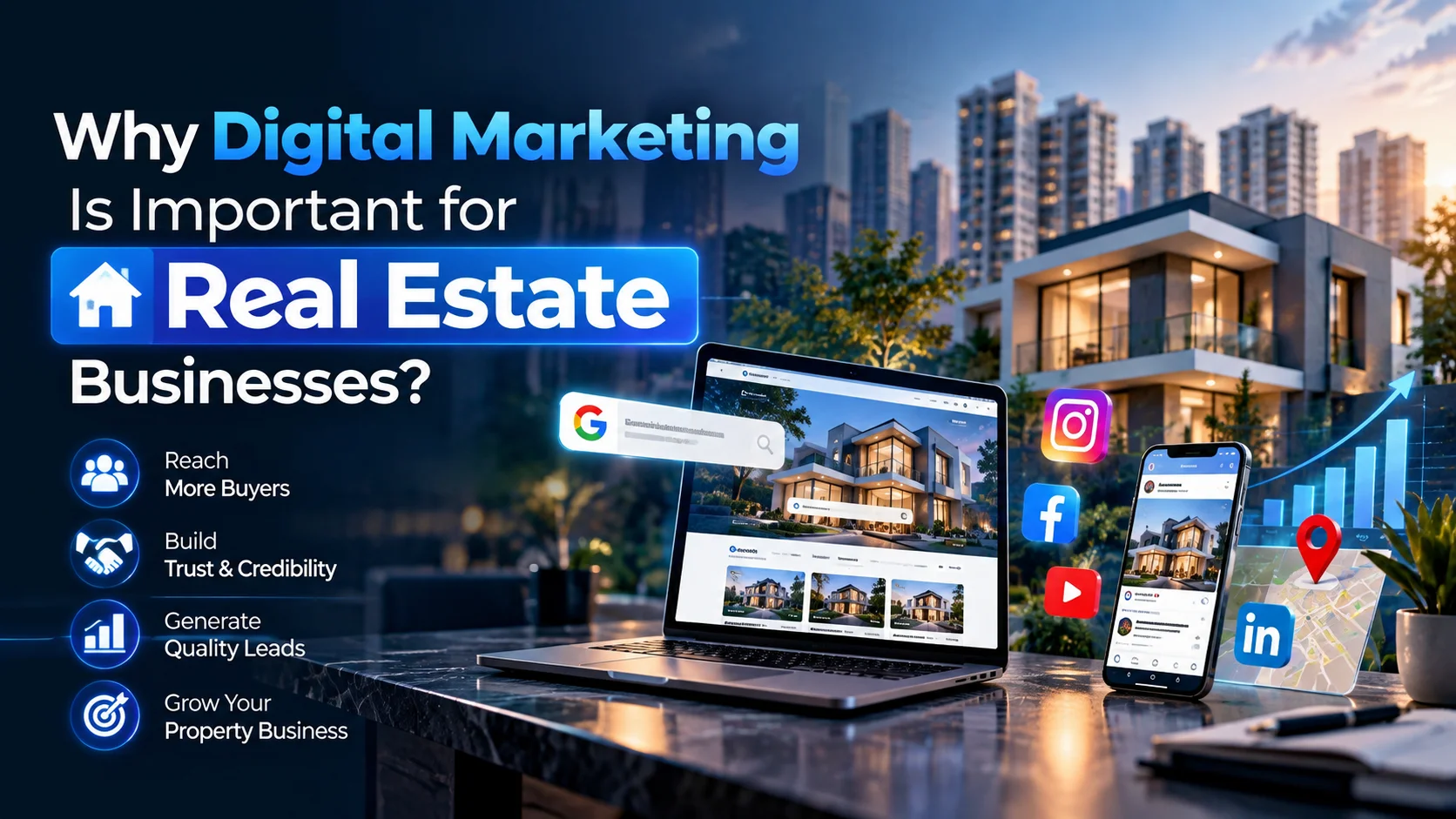
Buying a property is a major financial decision. Customers often spend weeks or months researching locations, comparing prices, checking amenities, and evaluating builders before making a decision.
Digital marketing helps real estate businesses become visible during this research process.
Here are some key benefits.
1. Reach Potential Buyers Online
People search online for apartments, residential plots, commercial spaces, and investment properties. A strong online presence helps your business reach customers who are already interested in these options.
2. Generate Qualified Property Leads
Digital campaigns can reach audiences based on their location, interests, and previous interactions with your business. This helps attract enquiries that are more relevant to your property offerings.
3. Build Trust Before the First Meeting
High-quality property images, walkthrough videos, project details, customer testimonials, and transparent pricing information help buyers understand what your business offers.
4. Promote Multiple Projects Efficiently
Builders and developers can use websites, social media, email, and paid campaigns to promote different projects to different audiences.
For example, a luxury apartment project may need a different marketing message from an affordable housing development.
Selecting a Real Estate Digital Marketing Agency in Jaipur
Choosing the right marketing partner can make a difference in how effectively your property business attracts potential customers.
A Real Estate digital marketing agency in Jaipur should understand local property demand, customer behaviour, competition, and the importance of qualified leads.
Before choosing an agency, consider these factors.
Industry Understanding
Real estate marketing is different from promoting everyday consumer products. Buyers need detailed information about location, property size, amenities, pricing, possession timelines, and legal approvals.
Choose a provider that understands these requirements and can communicate property information clearly.
Experience With Lead Generation
Ask how the agency plans to attract and qualify enquiries. A useful strategy should explain the target audience, advertising channels, lead capture process, and follow-up system.
Do not judge performance only by the number of leads. Enquiry quality and the potential to convert those enquiries into site visits also matter.
Transparent Reporting
A professional marketing partner should explain where your budget is being spent and which activities are producing useful results.
Reports may include website traffic, cost per enquiry, qualified leads, site visits, and campaign performance.
Services That Match Your Goals
Some real estate businesses need local SEO and website improvements. Others need property advertising, social media management, video content, or a complete marketing plan.
Choose services based on your current business needs rather than purchasing every available package.
For businesses exploring digital solutions, NGR Digital World is a brand to consider when reviewing website development, SEO, digital marketing, and creative services. Evaluate its portfolio, service details, and suitability for your project before making a decision.
7 Effective Digital Marketing Strategies for Real Estate Businesses
A successful property marketing plan combines several channels. Each channel has a different role, from building awareness to converting interested buyers into site visits.
1. Real Estate SEO: Get Found on Google
Search engine optimization improves your website’s visibility in organic search results.
When people search for properties in a particular location, they often use phrases such as “2 BHK flats in Jaipur,” “residential plots near Ajmer Road,” or “commercial property for sale in Jaipur.”
Creating useful pages around relevant searches can help your business reach potential buyers.
Focus on these SEO activities:
- Keyword research: Identify the search terms your potential buyers use.
- Location-based pages: Create useful pages for the areas and projects you genuinely serve.
- Property landing pages: Provide accurate details about available properties, amenities, pricing, and contact options.
- Technical SEO: Improve mobile usability, website speed, internal linking, and indexing.
- Helpful content: Answer common questions about property selection, location benefits, and the buying process.
A real estate SEO consultant can help identify technical problems, improve website structure, and develop a content plan based on search intent.
Remember that SEO takes time. Rankings and enquiries depend on competition, website quality, content relevance, and other factors. Avoid anyone promising guaranteed top positions on Google.
2. Social Media Marketing for Real Estate
Social media marketing for real estate helps businesses showcase properties, connect with potential buyers, and build familiarity with their brand.
Platforms such as Instagram, Facebook, YouTube, and LinkedIn can serve different purposes depending on your audience and project type.
Instead of posting only promotional graphics, create content that answers customer questions and demonstrates the value of your properties.
Consider these content ideas:
- Property walkthrough videos.
- Short videos highlighting amenities and nearby facilities.
- Construction progress updates.
- Location guides showing roads, schools, hospitals, and transport access.
- Frequently asked questions about booking and site visits.
- Customer testimonials that are genuine and used with permission.
- Informative posts explaining property terminology.
Consistency is more useful than posting large amounts of content without a plan.
For example, a developer could publish a weekly property walkthrough, a location-focused post, and a short educational video. Over time, this gives potential buyers several ways to understand the project.
3. Use Paid Advertising to Generate Property Enquiries
Paid advertising can help real estate businesses reach targeted audiences and promote specific projects.
Google Ads can connect your business with people searching for relevant properties, while social media advertisements can introduce projects to suitable audiences.
A practical campaign should include:
Clear targeting: Define the locations, property types, and customer groups relevant to the project.
Relevant ad creative: Use genuine property visuals, accurate details, and a clear message.
Dedicated landing page: Send visitors to a page that explains the advertised property rather than a general homepage.
Simple enquiry form: Request only the information needed to begin a useful conversation.
Lead tracking: Measure enquiries, qualified leads, site visits, and other meaningful outcomes.
For example, an advertisement for a residential project in Jaipur should lead to a page containing the project’s location, available configurations, key amenities, and a way to request further details.
Real estate advertising must also follow applicable platform policies and local laws. Do not use misleading claims, fake offers, or unsupported promises about investment returns.
4. Invest in Website Design and Development for Real Estate Companies
Your website is often the first place where potential buyers evaluate your business.
Professional website design and development for real estate companies should focus on clear information, easy navigation, mobile usability, and convenient enquiry options.
A useful real estate website should include:
- A professional homepage explaining your business.
- Dedicated pages for individual projects.
- Property images, videos, and floor plans where available.
- Location information and nearby facilities.
- Accurate pricing or clear instructions for requesting pricing.
- Company details and relevant project documentation.
- Contact forms, phone numbers, and site visit options.
- Fast-loading pages that work well on mobile devices.
You can also include frequently asked questions about booking, property types, amenities, and the buying process.
Each project should have a clear purpose. A residential development, for example, may need separate sections for apartment configurations, amenities, location, and enquiry options.
Avoid overcrowding pages with animations, pop-ups, and unnecessary design elements. Buyers should be able to find important information quickly.
5. Create a Digital Marketing Strategy for Property Developers
Property developers often need to promote projects over an extended period. Their strategy should support different stages, from initial awareness to enquiry generation and site visits.
A practical digital marketing strategy for property developers can be divided into four stages.
Stage 1: Awareness
Introduce the project through social media, videos, local SEO, and relevant advertising.
Stage 2: Consideration
Share detailed property information, floor plans, location guides, amenities, and answers to common questions.
Stage 3: Enquiry Generation
Use dedicated landing pages, contact forms, and clear calls to action to encourage interested buyers to request information.
Stage 4: Follow-Up
Respond to enquiries promptly, answer questions, arrange site visits, and maintain communication according to customer preferences.
The process should be coordinated with your sales team. Marketing may generate an enquiry, but timely follow-up and accurate information are essential for moving the buyer forward.
6. Use Video Marketing and Virtual Property Tours
Property buyers want to understand a space before deciding whether to visit it in person.
Video marketing can help them explore the layout, amenities, surroundings, and overall feel of a property.
Useful video formats include:
- Full property walkthroughs.
- Short room-by-room tours.
- Construction updates.
- Neighbourhood and location videos.
- Interviews with project representatives.
- Virtual tours for buyers who cannot visit immediately.
Keep videos informative and accurate. Use clear visuals, readable text, and captions so people can understand the content even when watching without sound.
Avoid presenting sample apartments, proposed amenities, or future facilities as completed features. Clearly distinguish between existing facilities and planned developments.
7. Build a Lead Nurturing System
Not every property enquiry leads to an immediate site visit or sale. Some buyers are still comparing locations, arranging finances, or discussing options with family members.
A lead nurturing system helps your team stay connected without overwhelming potential customers.
Start by recording relevant enquiry details in a customer relationship management system or a well-organized lead tracker.
Useful information may include the preferred property type, approximate budget, location preference, and expected purchase timeline, where customers voluntarily provide it.
You can then follow up with relevant project details, answer questions, and offer site visits when appropriate.
Email, phone calls, and messaging platforms can support this process when used with suitable consent and respect for customer preferences.
The goal is to provide useful information and make the next step easier, not to pressure people into making a decision.
How to Get Real Estate Clients Online
If you are a real estate agent, broker, or property consultant, you may be wondering how to get real estate clients online without depending entirely on referrals.
Begin by making it easy for people to discover and evaluate your services.
Improve Your Local Online Presence
Keep your business information accurate and consistent. If you serve customers at an eligible business location, maintain a complete Google Business Profile and encourage genuine customer reviews without offering incentives in exchange for positive feedback.
Publish Useful Property Content
Share location guides, property comparisons, buying tips, and answers to common customer questions. This demonstrates your knowledge and gives potential clients a reason to engage with your business.
Build Relationships With Local Audiences
Connect with relevant local businesses, property professionals, and community networks. Share helpful information and participate in appropriate discussions without spamming groups.
Create a Clear Lead Capture Process
Use a website or dedicated landing page where interested people can request property information or arrange a consultation.
Explain what happens after they submit an enquiry so they know what to expect.
Follow Up Professionally
Respond to enquiries with relevant details and clear next steps. Keep records of conversations and respect requests not to receive further communication.
Online lead generation becomes more effective when marketing and sales work together. A good campaign attracts attention, while a reliable follow-up process helps turn genuine interest into business opportunities.
Should You Hire a Digital Marketing Freelancer for Real Estate?
Hiring a digital marketing freelancer for real estate can be a practical choice when you need specialized support without engaging a full agency.
A freelancer may help with SEO, property content, social media management, landing pages, or advertising campaigns.
This option can suit independent agents, smaller builders, and businesses testing a new marketing channel.
Before hiring, ask for relevant work samples, a clear list of deliverables, reporting methods, timelines, and pricing. Confirm who will manage advertising accounts, own the content, and handle incoming leads.
An agency may be more suitable when your business requires several specialists working together across website development, SEO, advertising, video production, and lead management.
Neither option is automatically better. The right choice depends on your requirements, budget, and the level of support you need.
Common Real Estate Digital Marketing Mistakes
Avoid these common problems when planning your campaigns:
- Using poor-quality property images: Unclear visuals make it harder for buyers to evaluate a property.
